Japanese Dinner Etiquette: Quiet Rules for High-Stakes Conversations
Japan treats dinner as a calibrated encounter. Hospitality carries the room; hierarchy sets the arc; restraint creates space for decisions. Fluency in the unspoken codes—seating, service, silence, and timing—turns a meal into a precise instrument for trust. What follows is a practical, high-level field guide for dinners that matter.
Arrival: First Impressions Are Architectural
Punctuality is non-negotiable. Arrive two to five minutes early and present yourself without rush. Shoes define the threshold: if tatami is involved, remove footwear and align it neatly, toes facing the door. Wear impeccable socks. Outerwear disappears to the cloakroom; briefcases rest by the side, not on cushions.
If introductions occur at dinner rather than earlier, exchange meishi (business cards) standing, with both hands, text facing your counterpart. Receive with care, glance to read, and place cards on the table in order of seniority or in a card case—not in a pocket.
Seating: Hierarchy Written in the Room
In private rooms, the tokonoma (decorative alcove) marks the place of honor. The most senior guest sits farthest from the door, back to the alcove. The host takes the position nearest the door to manage service. Allow the host or staff to indicate seats; do not self-assign. If the setting is counter dining at a kaiseki or sushi restaurant, the host will secure central seats for guests while taking a marginal position.
The Opening: Warm Towel, Small Signals
An oshibori arrives first. Use it briefly for hands only; do not touch face or neck. Napkin on lap, not tucked. If slippers are provided for a restroom trip, use them strictly for that purpose and return to the tatami in stocking feet.
Alcohol sets the social temperature. If offered, accept the first pour—even a symbolic sip—so the kanpai can proceed. Non-drinkers may request tea or water; the formality lies in participation, not in alcohol content.
Drinks: Never Pour for Yourself
Japan’s clearest hospitality signal is reciprocal pouring. Monitor your neighbor’s glass. When it drops to a third, lift the bottle and pour with both hands. They will reciprocate. Do not refill your own glass. For sake, respect temperature choices set by the chef or sommelier; premium styles are often served slightly chilled to reveal aromatics. With beer, avoid foam-less fills; a modest head is correct.
If you prefer light consumption, pace by leaving a visible margin in the glass. To decline, rest your palm lightly over the rim and offer a quiet “kekko desu” (I’m fine). There is no need to invert glasses or deliver explanations.
The Meal’s Grammar: Kaiseki Pace and Precision
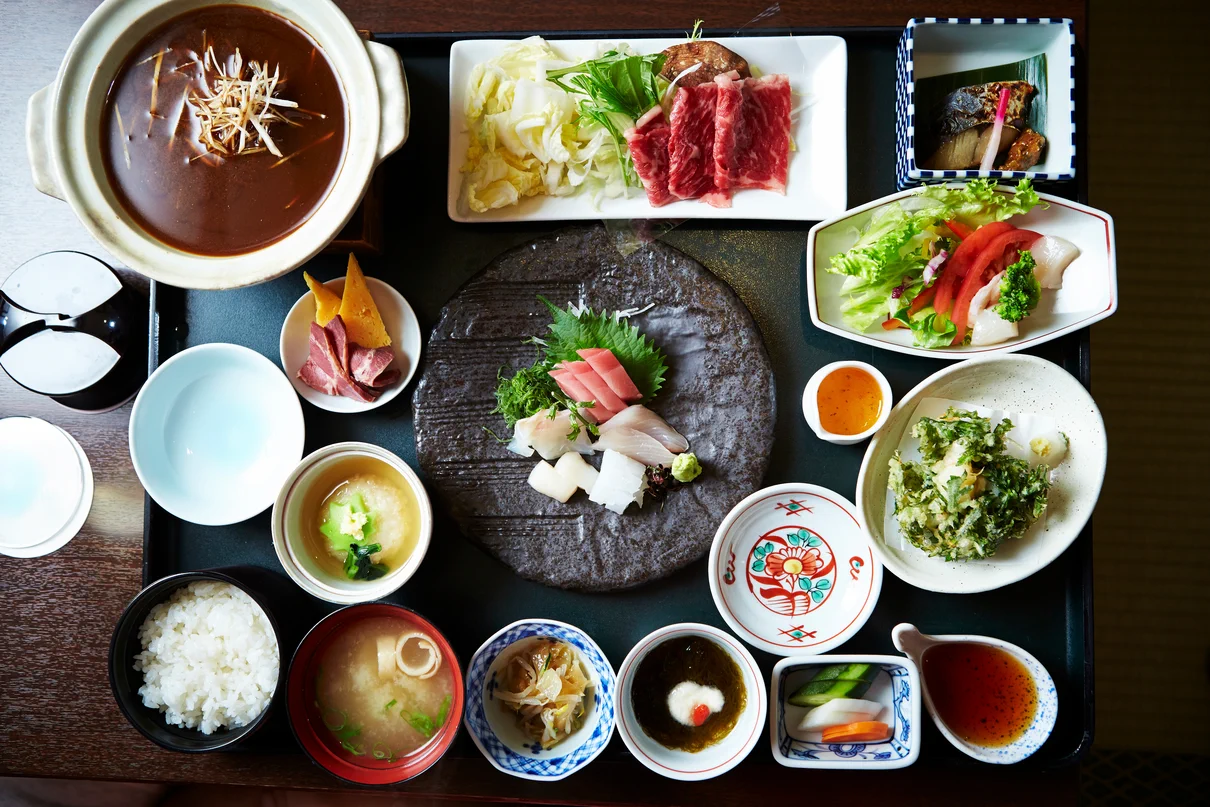
At high-end restaurants, a kaiseki structure governs sequence and portion: seasonal appetizers, sashimi, a simmered or grilled course, rice and pickles, soup, then fruit or wagashi. At sushi counters, the omakase is the chef’s narrative; resist requests until invited.
Eat each course as it arrives. The kitchen tracks cadence closely; leaving plates untouched while talking suggests disinterest in the craftsmanship. Silence during the first bite is normal. Appreciation is succinct: “oishii desu” suffices. Loud analysis crowds the room.
Chopsticks: Quiet Discipline
Lift bowls (rice, miso) toward you; do not hover over the table.
Rest chopsticks on the hashioki or wrapper between bites. Never cross them, lick them, or stand them upright in rice.
Do not pass food chopstick-to-chopstick; this echoes funeral rites. If sharing, use the opposite ends of your chopsticks to take from a communal plate.
Do not rub disposable sticks unless splinters are evident; it implies cheapness.
Soy and Wasabi: Precision Over Flood
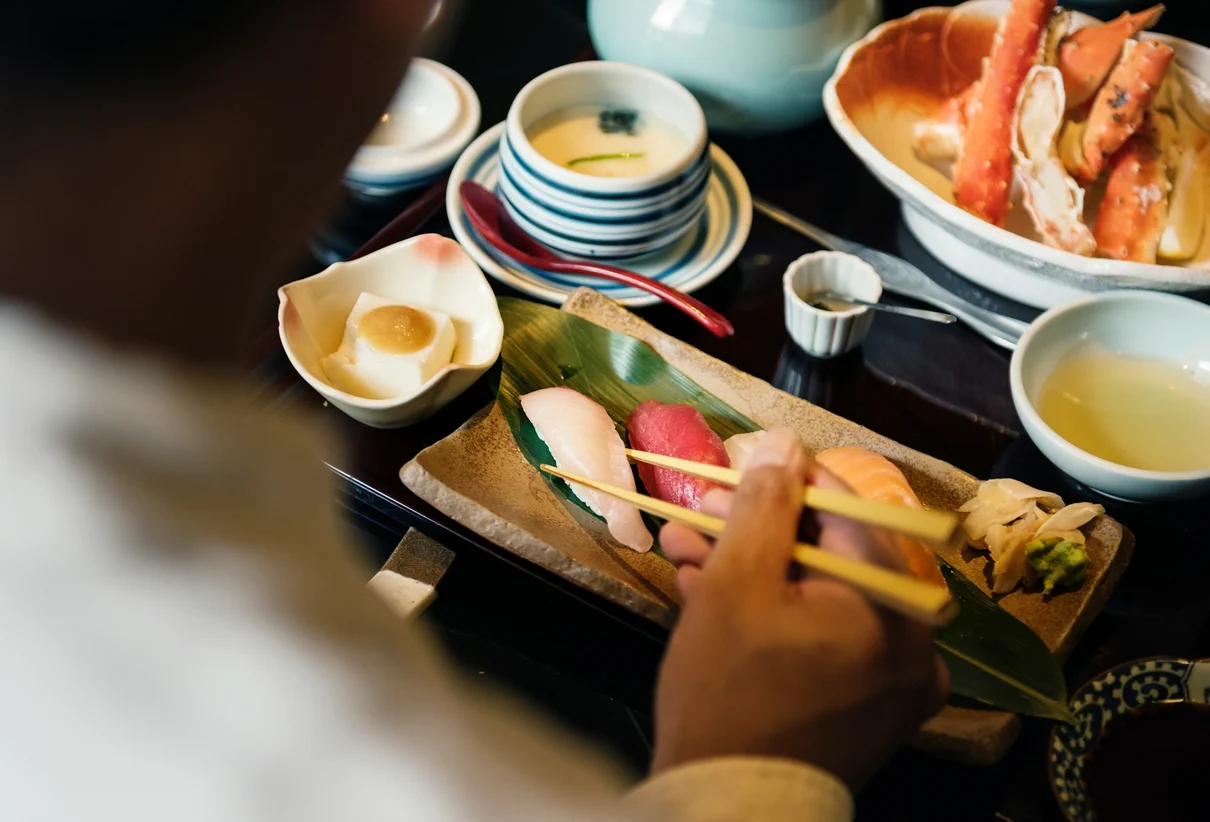
Pour a minimal pool of soy sauce. Dip fish side for nigiri, not the rice, to preserve structure.
Do not stir wasabi into soy unless the chef suggests it; use the dab placed by the itamae as part of the composition.
Ginger cleanses the palate between pieces, not as a topping.
Conversation: Timing Is a Tool
High-stakes topics live downstream of hospitality. The first third of the meal establishes rapport: seasonality, craft, travel, and gratitude to the host. Business enters after the alcohol softens formality, typically post-sashimi or after the grilled course, never during the rice and soup that signal closure.
Speak in measured turns. Interruptions read poorly. Allow pauses; in Japan, silence signals respect and thought, not disagreement. Avoid cornering a counterpart into a definitive yes at the table. Consensus may be affirmed, but formal commitments travel later through proper channels.
Reading the Host and the Room
A skilled host manages the invisible: refills, temperature, and the bridge between social and substantive. Follow their pace. If they steer toward lighter topics, do not force an agenda. If the chef addresses the table, pause conversation and attend. At counters, engage with the chef briefly and directly; at private tables, keep dialogue within the group and let staff flow unobstructed.
Mobile phones remain out of sight. If a necessary message arrives, excuse yourself discreetly between courses. Photography is acceptable in many contemporary settings, but ask—especially at chef’s counters—and never disrupt service with flashes or lengthy setups.
Dietary Constraints: Solve Quietly in Advance
Special requests belong to the reservation, not to the table. If you avoid raw fish, offal, or alcohol, inform the concierge ahead. The kitchen will design an equivalent arc. Last-minute exclusions strain the choreography and reflect poorly on the host.
Payment, Tipping, and the Exit
The check is a backstage affair. In fine restaurants, the host settles at the front desk or via card on file, away from the table. Do not reach theatrically for the bill. In Japan, tipping is not customary and can cause confusion; express gratitude verbally and with a slight bow. If gifts change hands, offer omiyage (quality, regionally meaningful items) neatly wrapped and present with both hands at the start or end, per the host’s cue.
On departure, realign chairs or cushions, ensure the space looks as composed as you found it, and thank both host and staff. Winter coats are donned at the threshold, not at the table.
Varied Formats: Izakaya, Washoku, and Steak
Izakaya: More elastic. Sharing plates, casual pours, and lively conversation. Codes remain—pour for others, avoid over-ordering, and keep the table tidy.
Traditional washoku: Highest attention to seasonality and ceramics. Observe the sequence closely and mirror the pace of the senior guest.
High-end steak or tempura: Countermasters orchestrate bite-to-bite. Eat promptly, praise briefly, and allow the next piece to arrive unimpeded.
Health, Comfort, and Poise
Tatami seating demands posture. If seiza (kneeling) is challenging, sit cross-legged only if the host suggests an alternative or chairs are provided. Moderate fragrance. Remove bulky watches that clink on lacquerware. If you must step away, place chopsticks on the rest, fold your napkin loosely, and exit with a slight bow to the host.
Actionable Moves for the Executive Traveler
Book private rooms for sensitive discussions; ask for tatami or counter per the evening’s purpose.
Send constraints ahead through the concierge; never negotiate menus at the table.
Master the pour: never refill your own glass; anticipate your neighbor’s.
Track the arc: rapport first, substance mid-meal, confirmation near closing—no ultimatums.
Align with hierarchy: wait for seating cues, toast in order, and defer to the senior guest’s pace.
Close discreetly: host settles the bill offstage, no tipping, concise thanks.
The Final Note: Authority in Restraint
Japanese dining converts understatement into leverage. Seating encodes respect. Service choreographs trust. Small gestures—how you pour, where you rest your chopsticks, when you allow silence—carry more weight than declarations. For the executive traveler, command comes from calibration: you read the room, accept the tempo, and aim for clarity without strain. The result is the outcome you want and the relationship you need, achieved in a language where the quiet rules do most of the talking.
Enjoyed this article?
Want more insights on wellness, fulfillment, and high-performance living? Subscribe to our newsletter for exclusive updates and resources.